

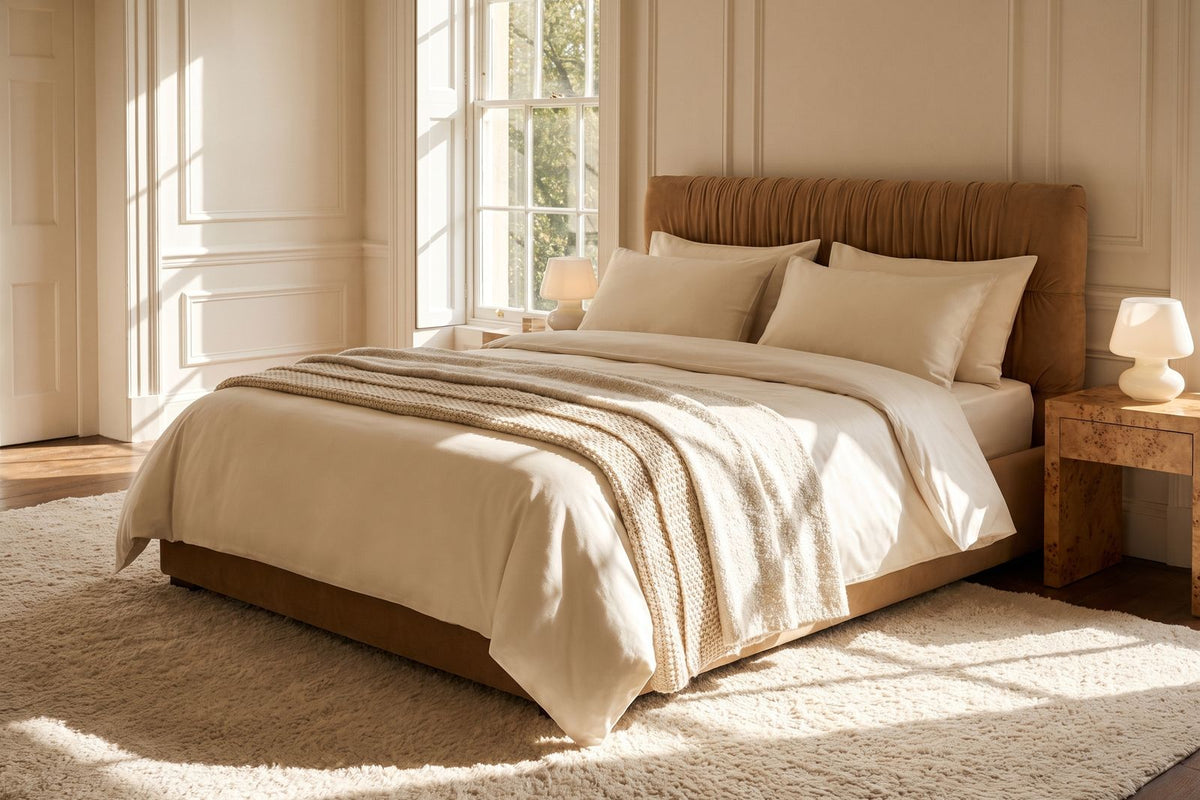
Double beds continue to be one of the most widely chosen options in UK homes because they balance comfort with practicality extremely well. They provide enough sleeping space for two people while still fitting comfortably into many standard bedroom layouts. In smaller homes, flats, and guest rooms, double beds often offer the best compromise between usable floor space and everyday sleeping comfort. Their versatility makes them suitable for couples, single sleepers wanting extra space, teenagers upgrading from smaller beds, and multi-purpose bedrooms alike. Balancing reliable sleeping comfort with practical space efficiency is one of the biggest reasons double beds remain so popular.
Standard UK Double Bed Dimensions in cm and Inches

A standard UK double bed measures approximately 135 cm wide by 190 cm long. In imperial measurements, this equals roughly 4 feet 6 inches wide by 6 feet 3 inches long. These dimensions apply to the mattress itself, although the overall bed frame may become larger depending on the design chosen. Upholstered frames, thicker headboards, and built-in storage options can all increase the final footprint of the bed within the room. Understanding both mattress dimensions and total bed frame sizing helps create more accurate bedroom planning.
Bedroom Layout Matters Alongside Bed Size

Even when a double bed technically fits inside a bedroom, the surrounding layout still plays a major role in how comfortable the space feels. Bedrooms with limited clearance around the bed can quickly become difficult to move around, especially when wardrobes, drawers, or desks are included within the room. Good bedroom planning usually considers:
- Walking space beside the bed
- Wardrobe and drawer access
- Bedside table positioning
- Door and window clearance
Balancing practical room circulation with suitable bed proportions helps bedrooms feel more functional and visually balanced overall.
Double Beds Compared to Small Double and King Size Beds

Double beds sit directly between small doubles and king-size beds in terms of width and overall sleeping space. Small doubles save additional floor space but provide slightly less room for couples, while king-size beds increase comfort by offering more personal sleeping width. Double beds often remain the preferred middle ground because they provide comfortable sleeping space without overwhelming medium-sized bedrooms. Improving both bedroom flexibility and long-term night-time comfort is one reason standard doubles continue to suit many households.
Bedding and Mattress Compatibility Are Important

Selecting the correct bedding size is essential for both comfort and appearance. Standard UK double beds require double-sized fitted sheets, duvet covers, and mattress protectors designed specifically around UK measurements. Mattress depth should also be considered, particularly when using thicker mattresses or additional toppers. Properly fitted bedding helps maintain a neater appearance while improving overall comfort during sleep. Paying attention to both bedding proportions and mattress compatibility helps avoid sizing problems later.
Double Beds Work Across Many Different Room Types

One of the biggest advantages of double beds is how adaptable they are across different home layouts. They commonly suit:
- Main bedrooms
- Guest bedrooms
- Teen bedrooms
- Rental properties
- Flats and apartments
The combination of manageable dimensions and comfortable sleeping space allows double beds to work effectively in many different types of interiors without making rooms feel overcrowded.
Bed Frame Style Can Affect How Large the Bed Feels

The visual appearance of the bed frame can strongly influence how spacious the room feels overall. Slimmer wooden or metal frames often create a lighter appearance that works well in compact bedrooms, while larger upholstered frames can make the bed feel more substantial and luxurious. Storage beds may also require additional space around the frame for drawer access. Choosing the right frame design alongside balanced bedroom layout planning helps create a more comfortable and visually organised sleeping space.
Double Beds Continue to Balance Comfort and Practical Living
Although larger beds provide additional sleeping room, double beds remain one of the most practical choices for everyday UK living. They offer reliable comfort for two people while still allowing enough room for movement, storage, and flexible furniture placement within many standard bedrooms. Whether used in a main bedroom, guest space, or flat layout, a double bed continues to provide a strong balance between comfort, practicality, and efficient use of space.
In this blog, we’ve gathered and answered some of the most commonly asked questions about double bed sizes, dimensions, and bedroom planning. Keep reading for practical insights and useful details you can easily apply within your own bedroom layout and daily comfort.
Double Bed Dimensions UK: Width, Length and Height Explained
Understanding Double Bed Dimensions UK: Width, Length and Height is essential when planning a comfortable and practical bedroom layout. A standard UK double bed is designed to suit two sleepers while still fitting comfortably into most medium-sized bedrooms. However, many people focus only on mattress width and forget that bed frames, headboards, and overall bed height also affect how the room functions day to day. Knowing the exact dimensions helps avoid overcrowding while ensuring the space still feels balanced and comfortable.
Standard UK Double Bed Measurements
A standard UK double bed typically measures 135 cm wide by 190 cm long, which is approximately 4 feet 6 inches by 6 feet 3 inches. These dimensions make double beds one of the most popular options for couples, guest rooms, and growing teenagers moving from smaller beds. While the mattress size itself remains relatively consistent, overall frame dimensions may vary depending on the bed style and structure. Understanding standard UK bed dimensions and practical mattress sizing helps prevent layout problems later.
Bed Frame Height Can Change the Feel of a Room

Height is often overlooked when discussing bed dimensions, yet it strongly affects both comfort and visual balance within the bedroom. Lower bed frames can create a cleaner and more modern appearance, while taller frames often provide extra storage space underneath. Mattress depth also contributes to the final overall height of the bed. In smaller rooms, balancing bed height and overall room proportion helps maintain a more open and comfortable atmosphere.
Double Beds Work Well in Many Bedroom Types
One reason double beds remain so popular is their versatility across different room sizes. They are large enough for comfortable sleeping while still fitting into many UK homes where bedroom space may be more limited compared to larger properties. Double beds commonly work well in:
- Main bedrooms in smaller homes
- Guest bedrooms
- Teen bedrooms
- Rental properties
Balancing practical floor space with comfortable sleeping space is one of the biggest advantages of standard double beds.
Bedroom Layout Matters Alongside Bed Dimensions
Even when the bed technically fits inside the room, the surrounding layout still needs enough clearance for movement and furniture placement. Bedrooms that feel overcrowded often lack sufficient walking space around the bed itself. Leaving adequate room beside wardrobes, drawers, and doors helps the space feel significantly more comfortable day to day. Planning around both bed positioning and overall room functionality creates a much more practical bedroom setup overall.
Double Bed vs Small Double: Size Comparison for UK Bedrooms

When comparing Double Bed vs Small Double: Size Comparison, the main difference comes down to how much sleeping space and floor space each option provides. Both beds are popular in UK homes, particularly in rooms where balancing comfort with practical layout is important. While the size difference may initially appear small on paper, it can noticeably affect how spacious the room feels and how comfortably the bed works for one or two sleepers. Choosing between them often depends on the bedroom size, storage needs, and how the bed will be used daily.
A Standard Double Bed Offers More Sleeping Space

A UK standard double bed measures 135 cm wide, while a small double usually measures around 120 cm wide. The length generally remains the same between both sizes at approximately 190 cm. That extra width on a standard double creates more room for couples and provides a less restricted sleeping experience overall. For single sleepers, both options can feel spacious, but couples often notice the additional sleeping width and improved night-time comfort provided by a standard double bed.
Small Double Beds Work Well in Compact Rooms
Small double beds are often chosen for bedrooms where space is more limited but a single bed feels too narrow. They provide a good middle ground between comfort and practicality, particularly in UK homes where second bedrooms and guest rooms can be relatively compact. Small doubles often suit:
- Teen bedrooms
- Guest rooms
- Studio flats
- Smaller main bedrooms
Improving overall floor space while still maintaining comfortable bed proportions is one of the biggest benefits of small double beds.
Room Layout Feels Different With Each Bed Size
Even a modest increase in bed width can affect how the entire room functions. Standard doubles naturally occupy more visual and physical space, which may reduce walking clearance or furniture positioning options in tighter layouts. Small doubles often allow more flexibility for bedside tables, wardrobes, and desk areas without making the room feel overcrowded. Balancing both bed size and practical room circulation helps create a more comfortable and functional bedroom environment.
Comfort Priorities Often Decide the Better Option
The right choice ultimately depends on whether sleeping comfort or additional floor space matters more within the room. Couples who sleep together regularly may prefer the extra width of a standard double, while single sleepers or occasional guest rooms may benefit more from the practicality of a small double. Understanding the difference between daily usability and overall space efficiency helps ensure the bedroom feels comfortable without compromising layout flexibility.
Double Bed vs King Size: Which Is Right for You in UK Homes?
When comparing Double Bed vs King Size: Which is Right for You, the decision usually comes down to balancing sleeping comfort with available bedroom space. Both bed sizes are extremely popular in UK homes, yet they create noticeably different room layouts and sleeping experiences. A standard double bed often suits medium-sized rooms more comfortably, while king-size beds provide additional sleeping space for couples who prefer more freedom during the night. The best choice depends on room dimensions, lifestyle, and how the bedroom functions day to day.
King Size Beds Offer More Width for Couples
The biggest difference between the two sizes is width. A UK double bed measures approximately 135 cm wide, while a king-size bed increases that width to around 150 cm. Although the difference may appear modest, the additional space becomes very noticeable when two people share the bed regularly. Couples often prefer the extra sleeping space and improved night-time comfort that a king-size bed provides, especially if one or both sleepers move frequently during the night.
Double Beds Work Better in Medium-Sized Bedrooms
Double beds remain one of the most practical choices for UK homes because they fit comfortably into many standard bedroom layouts without overwhelming the available floor space. In smaller or medium-sized rooms, a double bed often allows more flexibility for wardrobes, bedside tables, and walking space around the bed itself. Double beds commonly suit:
- Smaller master bedrooms
- Guest bedrooms
- Apartments and flats
- Homes with limited floor space
Balancing practical room circulation with comfortable bed sizing is one reason double beds remain so widely used.
King Size Beds Change the Overall Room Layout
Upgrading to a king-size bed does not only affect sleeping comfort. It also changes how spacious or restricted the room feels overall. Larger beds naturally reduce visible floor space and may limit furniture placement options in tighter bedrooms. However, in larger master bedrooms, king-size beds often help create a more luxurious and balanced appearance. Improving both visual proportion and long-term bedroom comfort becomes especially important when selecting larger bed sizes.
Sleeping Habits Often Influence the Best Choice
The ideal bed size frequently depends on individual sleeping preferences and daily routines. Couples who prioritise personal sleeping space may benefit more from a king size bed, while single sleepers or smaller households may find a standard double perfectly comfortable. Bedrooms used for workspaces, storage, or multi-purpose layouts may also benefit from the additional floor space saved by choosing a double bed instead. Understanding both daily functionality and overall sleeping needs helps create a bedroom setup that feels comfortable and practical long-term.
What Room Size Do You Need for a Double Bed in UK Homes?
Understanding the concept of “What Room Size Do You Need for a Double Bed” is important because fitting the bed itself is only part of creating a comfortable bedroom layout. A room may technically accommodate a double bed, yet still feel cramped if there is not enough space left for movement, storage, or additional furniture. The right room size should allow the bed to sit comfortably within the space while maintaining practical walking clearance around it. Balancing comfort and layout becomes especially important in UK homes where bedroom sizes can vary significantly.
Standard Double Bed Measurements Affect Room Planning
A standard UK double bed measures approximately 135 cm wide by 190 cm long. However, the actual space required is larger once bed frames, headboards, and walking clearance are included. Bedrooms that only accommodate the mattress dimensions themselves often end up feeling restricted and difficult to move around comfortably. Considering both bed dimensions and realistic floor clearance helps create bedrooms that feel practical rather than overcrowded.
Smaller Bedrooms Require Smarter Layout Decisions
In more compact bedrooms, furniture positioning becomes extremely important when using a double bed. Beds placed too close to wardrobes, windows, or doors can interrupt movement and make the room feel visually heavier. Smaller rooms often benefit from:
- Slim bedside tables
- Built-in storage solutions
- Minimal bed frame designs
- Lighter room colours
Improving overall space efficiency and maintaining smoother room circulation helps smaller bedrooms feel more comfortable with a double bed.
Larger Bedrooms Allow Better Visual Balance
In larger bedrooms, double beds often create a more balanced and open appearance because there is more visible floor space surrounding the bed. This additional space allows for larger bedside furniture, seating areas, or storage without making the room feel crowded. Bedrooms with better proportions also tend to feel calmer and more functional overall. Creating strong visual balance alongside comfortable bedroom proportions improves both the appearance and practicality of the space.
Walking Space Around the Bed Matters Daily
One of the most overlooked aspects of bedroom planning is the importance of a comfortable walking space around the bed itself. Bedrooms that leave too little clearance often feel frustrating during everyday use, particularly when opening wardrobes, making the bed, or moving around at night. Ideally, there should be enough room to walk comfortably along both sides of the bed where possible. Prioritising both daily usability and smoother bedroom movement helps create layouts that remain comfortable long-term.
UK Double Bed Size vs European Double: What's the Difference?
When comparing UK Double Bed Size vs European Double: What's the Difference, the main distinction comes down to mattress dimensions and how bedding fits between the two systems. Although both are designed for two sleepers, UK and European double beds are not exactly the same size, which can create confusion when purchasing bed frames, mattresses, duvets, or fitted sheets. Understanding the measurement differences helps avoid compatibility issues while making it easier to choose the right bedding and furniture for the bedroom.
UK Double Beds Are Slightly Narrower Than European Doubles
A standard UK double bed measures approximately 135 cm wide by 190 cm long. In comparison, many European double beds measure around 140 cm wide by 200 cm long. This means European doubles are often slightly wider and longer than standard UK doubles. While the difference may seem relatively small, it can affect both sleeping comfort and how bedding fits across the mattress properly. The variation between UK bed sizes and standard European dimensions becomes especially important when buying imported furniture or bedding online.
Bedding Compatibility Often Causes the Biggest Problems
One of the most common issues people face with European beds in the UK is finding bedding that fits correctly. UK fitted sheets designed for standard doubles may feel too tight or too short on European mattresses because of the additional width and length. Similarly, European duvet sizing may not align perfectly with UK duvet covers. Common compatibility concerns often include:
- Mattress depth differences
- Fitted sheet sizing
- Duvet cover proportions
- Bed frame measurements
Checking exact bedding dimensions and mattress specifications before purchasing helps prevent unnecessary sizing problems later.
European Beds Can Feel Slightly More Spacious
The additional width and length of many European double beds can create a roomier sleeping experience, particularly for taller individuals or couples who prefer extra space. However, this also means the bed may occupy more floor area within smaller UK bedrooms. In compact rooms, even slight increases in mattress dimensions can affect furniture placement and walking clearance around the bed. Balancing comfortable sleeping space with practical room layout remains important regardless of which system is chosen.
Bedroom Planning Should Include Bed and Bedding Sizes Together
When selecting between UK and European double beds, it is important to consider not only the mattress itself but also how easily compatible bedding and furniture can be sourced long-term. Bedrooms with tighter layouts may suit UK double dimensions more naturally, while larger rooms can often accommodate European sizes more comfortably. Planning around both bed proportions and ongoing bedding availability helps create a more practical and stress-free bedroom setup overall.
What Size Duvet and Bedding Fits a Double Bed Properly?
Understanding what size duvet and bedding fits a double bed is important because incorrect bedding sizes can affect both comfort and the overall appearance of the bed. Bedding that is too small may leave the mattress exposed or feel restrictive during sleep, while oversized bedding can appear untidy and difficult to manage. Standard UK double beds require bedding designed specifically around their mattress dimensions to ensure the bed feels balanced, comfortable, and visually well-proportioned.
Standard UK Double Bed Bedding Sizes
A standard UK double mattress measures approximately 135 cm wide by 190 cm long. Bedding designed for this size usually follows matching dimensions to provide proper coverage without excessive overhang. Standard UK double bedding typically includes:
- Double fitted sheets
- Double duvet covers
- Double mattress protectors
- Double-sized duvets
Using correctly sized double bed bedding helps maintain better sleeping comfort while also improving how neatly the bed sits within the room.
Bedable double sizes: fitted sheet 137 × 190 × 36 cm and duvet cover 200 × 200 cm. The fitted sheet is cut 2 cm wider than the mattress for an easy fit – see our bedding size chart for every size.
Duvet Size Affects Comfort More Than Many People Expect
Some people prefer using larger duvets on double beds because extra width can feel more comfortable, especially for couples. A king-size duvet on a double bed often creates a fuller and more luxurious appearance while reducing the chance of the duvet being pulled unevenly during the night. However, oversized duvets may also require larger covers and slightly more storage space. Balancing practical duvet proportions with overall sleeping comfort helps create a bedding setup that feels both functional and comfortable.
Fitted Sheets Must Match Mattress Depth Properly
Mattress depth is another factor that strongly affects bedding fit. Modern mattresses vary significantly in thickness, particularly when memory foam toppers or pillow-top designs are involved. Standard fitted sheets may struggle to stay secure if the mattress is deeper than expected. Before purchasing bedding, it is often useful to check:
- Mattress depth measurements
- Elasticated corner flexibility
- Bedding fabric stretch
- Compatibility with toppers
Choosing fitted sheets with suitable mattress depth allowance helps improve both comfort and long-term bedding appearance.
Bedding Choice Also Shapes Bedroom Style
Beyond practicality, bedding contributes heavily to the overall atmosphere of the bedroom itself. Layered bedding, textured fabrics, and correctly proportioned duvets help beds appear fuller and more inviting within the room. Neutral bedding often creates a calmer appearance, while heavier textures can make bedrooms feel warmer and more luxurious. Combining suitable bedding proportions with balanced bedroom styling helps create spaces that feel comfortable both visually and physically.
Is a Double Bed Big Enough for Two People in Everyday Use?
One of the most common questions couples ask is, “Is a Double Bed Big Enough for Two People?” The answer often depends on personal sleeping habits, bedroom size, and how much space each person prefers during the night. A standard UK double bed is designed for two sleepers and remains one of the most widely used bed sizes across the country. However, comfort levels can vary significantly depending on how the bed is used daily and whether additional sleeping space is important for long-term comfort.
Standard Double Beds Provide Limited Personal Space
A UK double bed measures approximately 135 cm wide, which means each sleeper receives less personal width compared to larger options such as king-size beds. For some couples, this feels perfectly comfortable, particularly in smaller bedrooms where space is more limited. Others may find the reduced width restrictive, especially if one or both people move frequently during sleep. The balance between practical bedroom sizing and comfortable sleeping space often influences whether a double bed feels sufficient long-term.
Double Beds Work Well in Many UK Bedrooms
One reason double beds remain extremely popular is because they fit comfortably into a wide range of UK bedroom layouts. They provide enough sleeping space for couples while still allowing room for wardrobes, bedside tables, and movement around the bed itself. Double beds commonly suit:
- Smaller master bedrooms
- Guest bedrooms
- Flats and apartments
- Multi-purpose bedrooms
Balancing usable floor space with comfortable bed dimensions makes double beds one of the most practical choices for many households.
Sleeping Habits Influence Comfort Levels Significantly
The experience of sharing a double bed often depends more on sleeping behaviour than measurements alone. Couples who prefer closer sleeping arrangements may feel completely comfortable in a double bed, while those who value more personal space may prefer upgrading to a king size. Factors such as sleeping position, movement during the night, and even mattress firmness can all affect overall comfort. Improving both night-time comfort and long-term sleep quality often comes down to matching the bed size to personal routines.
Bedroom Space Sometimes Matters More Than Bed Size
Although larger beds provide additional sleeping room, they can also overwhelm smaller bedrooms and reduce practical movement space around the room. In compact UK homes, a double bed may create a better balance between comfort and layout flexibility compared to larger options. Maintaining comfortable room circulation alongside suitable bed proportions helps bedrooms feel more functional and visually balanced overall.
What Size Is a Double Bed in Metres in the UK?
Many people searching for bed measurements ask, “What Size Is a Double Bed in Metres?” Because room planning often becomes easier when dimensions are viewed in metric form rather than feet and inches. In the UK, a standard double bed measures approximately 1.35 metres wide and 1.90 metres long. These proportions make double beds one of the most practical and widely used sizes for couples, guest bedrooms, and medium-sized sleeping spaces.
Metric Measurements Help With Bedroom Planning
Using metres instead of smaller measurement units can make it easier to visualise how much floor space the bed will occupy within the room. This becomes especially useful when planning furniture layouts, storage placement, or walking clearance around the bed itself. Bedrooms that appear large enough initially may feel more restricted once wardrobes, bedside tables, and drawers are added. Understanding both metric dimensions and realistic room proportions helps avoid overcrowded layouts later.
Bed Frames Can Increase Overall Dimensions
Although the mattress itself measures approximately 1.35 m by 1.90 m, the total size of the bed may become larger depending on the frame style chosen. Upholstered beds, thicker headboards, and extended side frames can all increase the amount of floor space required. Some bed designs also include built-in storage, which affects how much clearance is needed around the room. Common factors influencing total bed size include:
- Headboard thickness
- Frame width
- Storage drawers
- Bedside clearance
Considering the complete bed frame dimensions rather than only the mattress size creates more accurate bedroom planning.
Double Beds Balance Comfort and Space Efficiency
Double beds remain extremely popular because they provide comfortable sleeping space without occupying as much room as larger king-size or super king options. In many UK homes, they create a practical balance between sleeping comfort and available floor space. This makes them particularly useful in:
- Medium-sized bedrooms
- Guest rooms
- Flats and apartments
- Smaller main bedrooms
Balancing practical space efficiency with comfortable sleeping dimensions is one reason double beds continue to suit many households.
Room Layout Still Matters Beyond the Measurements
Even when a double bed technically fits inside a room, overall comfort depends heavily on how the remaining space functions around it. Bedrooms should still allow comfortable movement, furniture access, and natural circulation throughout the space. Leaving enough room around the bed helps the room feel calmer and more functional during daily use. Combining sensible bed positioning with balanced room layout creates a much more comfortable sleeping environment overall.
How Big Is a Double Bed Compared to Other UK Bed Sizes?
Many people ask and search, “How Big Is a Double Bed?” particularly when deciding between different bed sizes for a new bedroom setup. A standard UK double bed measures approximately 135 cm wide by 190 cm long, making it one of the most commonly used bed sizes across the country. It is designed to comfortably accommodate two sleepers while still fitting into many medium-sized bedrooms without overwhelming the available floor space. Double beds sit between small doubles and king size beds in terms of overall dimensions, which is why they remain such a versatile option for different types of homes.
Double Beds Offer More Space Than Single and Small Double Beds
Compared to single or small double beds, a standard double provides noticeably more width for sleeping comfort. This extra space makes a significant difference for couples or individuals who prefer more room during the night. While small double beds are often chosen for tighter bedrooms, double beds usually create a better balance between comfort and practicality. The additional sleeping width and improved night-time comfort are some of the main reasons double beds remain so popular in UK households.
Room Size Influences How Big a Double Bed Feels
The actual feeling of size often depends on the proportions of the bedroom itself. In compact bedrooms, a double bed may appear relatively large and occupy a significant portion of the floor space. In larger bedrooms, the same bed may feel more balanced and proportionate within the room layout. Bedrooms with better spacing around the bed usually feel calmer and easier to move around comfortably. Improving overall room proportion and maintaining sufficient floor clearance helps the bed feel appropriately sized within the space.
Double Beds Work Across Many Different Bedroom Types
One of the biggest advantages of double beds is their flexibility across different room layouts and lifestyles. They commonly work well in:
- Main bedrooms
- Guest bedrooms
- Teen bedrooms
- Rental properties
Balancing practical bed dimensions with manageable room functionality allows double beds to suit a wide range of living situations without requiring excessive floor space.
Bed Frames Can Make Double Beds Feel Larger
The style of bed frame chosen can strongly influence how large the bed appears visually within the room. Chunkier upholstered frames and oversized headboards naturally create a heavier appearance, while slimmer wooden or metal frames often feel lighter and more space-efficient. Storage beds may also require additional room for drawer access around the sides of the frame. Considering both frame design and overall bedroom layout helps create a setup that feels comfortable without making the room appear overcrowded.
How Wide Is a Double Bed Compared to Other UK Sizes?
Choosing the right bed often depends heavily on width, especially when balancing sleeping comfort with available bedroom space. “How Wide Is a Double Bed” is an important question because even relatively small measurement differences between bed sizes can noticeably affect both room layout and overall comfort during sleep. A standard UK double bed measures approximately 135 cm wide, making it one of the most practical and widely used bed sizes for couples and medium-sized bedrooms.
Double Beds Offer More Width Than Single Options
Compared to single and small double beds, a standard double provides noticeably more sleeping room across the mattress. This additional width helps create a more comfortable sleeping experience, particularly for couples sharing the bed regularly. While single beds are mainly designed for one sleeper, double beds provide a more balanced level of comfort without taking up as much space as king size options. The increase in sleeping width and overall bed comfort is often immediately noticeable when upgrading from smaller bed sizes.
Bedroom Size Influences How Spacious the Bed Feels
The same double bed can feel very different depending on the proportions of the room itself. In smaller UK bedrooms, a double bed may occupy a large portion of the available floor space, while in larger bedrooms it may appear more balanced and proportionate. The surrounding furniture layout also affects how spacious the bed feels overall. Bedrooms with better walking clearance and stronger room balance tend to feel more comfortable regardless of bed size.
Double Beds Balance Comfort and Space Efficiency
One reason double beds remain so popular is because they provide comfortable sleeping space without overwhelming many standard UK bedroom layouts. They commonly work well in:
- Main bedrooms
- Guest bedrooms
- Teen bedrooms
- Flats and apartments
Balancing practical space efficiency with reliable sleeping comfort allows double beds to suit a wide variety of homes and lifestyles.
Bed Frame Style Can Affect Overall Width
Although the mattress width remains standard, the actual footprint of the bed may vary depending on the frame style chosen. Upholstered frames, wider headboards, and built-in storage designs can all increase the amount of space the bed occupies within the room. Slimmer wooden or metal frames often feel visually lighter and more suitable for compact bedrooms. Considering both frame dimensions and overall bedroom layout helps create a setup that feels comfortable without making the room appear overcrowded.
People Also Asked
What Size Is a Standard Double Bed in the UK?
A standard UK double bed measures approximately 135 cm wide by 190 cm long, which is around 4 feet 6 inches by 6 feet 3 inches. This size is designed to comfortably accommodate two sleepers while still fitting into many medium-sized UK bedrooms. Double beds are commonly used in main bedrooms, guest rooms, and flats because they balance practical floor space with reliable sleeping comfort.
What Is the Difference Between a Double and a King-Size Bed?
The main difference between a double and a king-size bed is width. A UK king-size bed measures approximately 150 cm wide, giving couples more personal sleeping space compared to the 135 cm width of a standard double. King-size beds also create a more spacious sleeping experience overall, although they naturally require larger bedrooms to avoid making the space feel overcrowded. Balancing extra sleeping width with practical room layout often determines which option works best.
How Big Does a Bedroom Need to Be for a Double Bed?
A bedroom should comfortably allow space not only for the bed itself but also for walking clearance, bedside furniture, and storage access. Double beds work best in medium-sized bedrooms where there is still enough room to move around naturally after placing the bed. Smaller bedrooms can still accommodate double beds, although furniture positioning becomes more important. Maintaining good room circulation and practical bedroom functionality helps prevent the space from feeling restricted.
Is a Double Bed the Same as a Queen Bed in the UK?
No, a UK double bed is not the same as a queen bed. In the UK, standard bed sizing typically moves from double directly to king size, whereas queen beds are more commonly used in the United States and some European markets. US queen beds are generally wider and longer than standard UK doubles. Understanding the difference between UK bed sizes and international mattress dimensions helps avoid confusion when buying imported furniture or bedding.
What Size Duvet Do I Need for a Double Bed?
A standard UK double bed usually requires a double duvet and double-sized bedding. Some people choose king-size duvets for extra coverage and a fuller appearance, especially when two people share the bed regularly. Mattress depth should also be considered when selecting fitted sheets, particularly for deeper modern mattresses. Matching the correct duvet proportions with suitable bedding sizes improves both comfort and appearance.
What Is the Difference Between a Double and a Small Double Bed?
A standard double bed measures approximately 135 cm wide, while a small double is usually around 120 cm wide. Both sizes generally share the same length, but the reduced width of a small double helps save floor space in more compact bedrooms. Standard doubles offer more sleeping room for couples, whereas small doubles often suit guest rooms, teenagers, or smaller flats more effectively. Balancing practical space efficiency with overall sleeping comfort usually helps determine the better option.
Are UK Double Beds the Same Size as US Double Beds?
No, but they are very close. A US double bed, usually called a full, measures 54 × 75 inches, which is about 137 × 191 cm. That makes it roughly 2 cm wider than a UK double (135 × 190 cm) and almost exactly the same length. The small difference can still affect how fitted sheets and bed frames fit, so check exact mattress measurements when buying furniture or bedding internationally.
Can a Tall Person Sleep Comfortably in a Double Bed?
Many taller people can sleep comfortably in a standard double bed, although height and sleeping preferences both influence comfort levels. Since UK double beds measure approximately 190 cm in length, very tall sleepers may sometimes prefer king-size options for additional legroom. Mattress quality and sleeping position also affect overall comfort significantly. Balancing suitable bed length with long-term sleep quality helps create a more comfortable sleeping environment overall.

Share:
UK Bed Sizes: Dimensions from Single to Super King and How to Plan Your Bedroom