

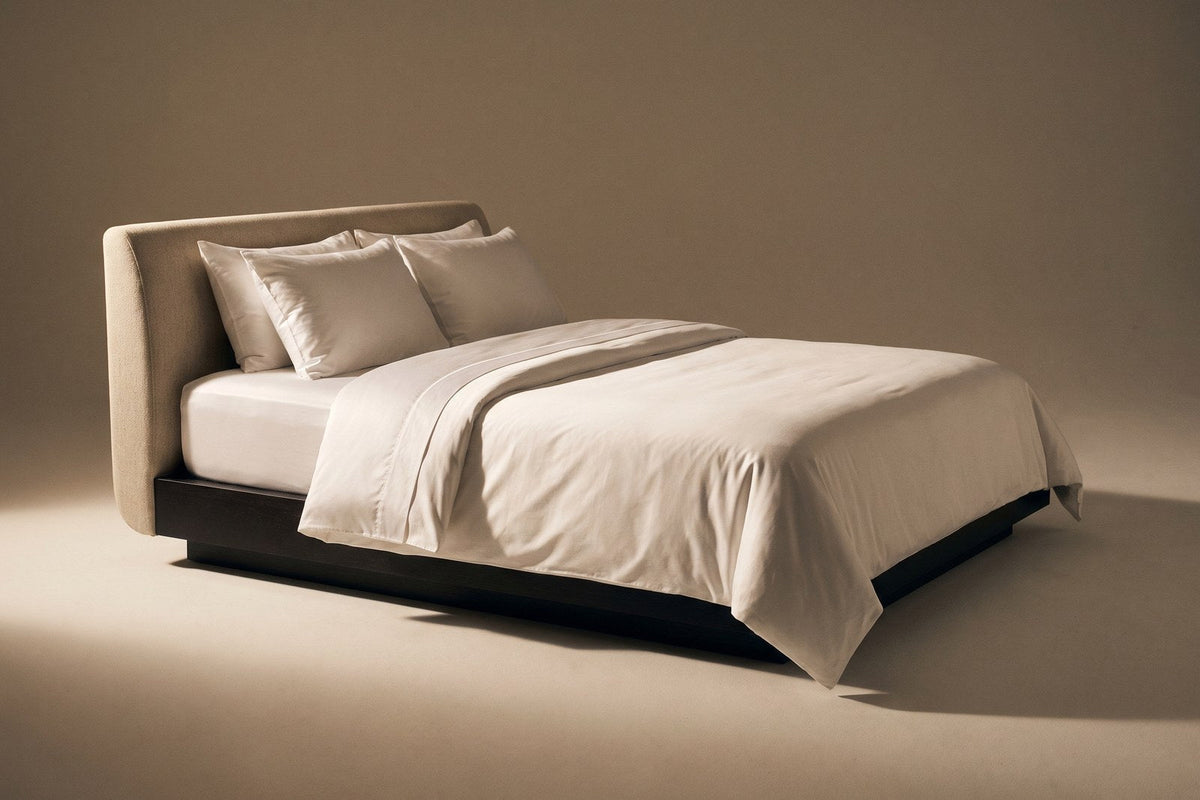
What is a fitted sheet bed, and why does it make such a difference to how well you sleep? You already know the frustration of improper bedding if you've ever woken up tangled in loose fabric or felt your sheets bunching underneath you. A fitted sheet is a bed sheet with elasticated corners that wraps around your mattress and creates a smooth, stable sleeping surface that stays put all night. Understanding fitted sheets vs flat sheets can change your sleep setup. This piece explores what fitted sheets are, how they differ from flat sheets, and why choosing the right fitted sheet matters for your sleep quality and mattress protection.
What Is a Fitted Sheet Bed?

The Simple Definition of a Fitted Sheet
A fitted sheet is a bedsheet with corners sewn so that they fit over the mattress corners without requiring folding. The defining feature is the elastic band incorporated into the construction, either around the entire edge or just at the corners. This elastic allows the sheet to stretch and grip the mattress securely. You no longer need the intricate tucking techniques that were once necessary with traditional flat sheets.
The modern fitted sheet emerged from a practical problem. People struggled with flat sheets that slipped off mattresses during sleep before fitted sheets existed. Historical records credit Bertha Berman with inventing the modern fitted sheet in 1959. Her design incorporated elastic edges that allowed the sheet to stay in place and marked the beginning of a new era in bedding that prioritised convenience alongside comfort.
Fitted sheets are characterised by their unique construction with elastic bands sewn into specific areas. This elastication ensures the sheet fits snugly over the mattress and prevents slippage during sleep. Many fitted sheets come with deep pockets to accommodate thicker mattresses, including those with toppers or pillow tops. Extra-deep fitted sheets can measure up to 46cm (18in) in depth and allow them to cover much thicker sleeping surfaces.
How Fitted Sheets Differ from Flat Sheets

The main difference between fitted sheets and flat sheets lies in their structure: one has gathered and elasticated corners, while the other does not. A flat sheet is a large rectangular piece of fabric without any elasticated qualities. Fitted sheets have elasticated corners that can be pulled over your mattress and secured in place.
Their usage is different as well. Fitted sheets form the base layer of your bedding and act as a comfortable barrier between you and your mattress. Flat sheets are used as top sheets and provide an extra layer between you and your duvet while preventing sweat or dirt from transferring to your duvet cover. Put simply, fitted sheets go directly onto the mattress, while flat sheets layer on top.
The practical implications of these differences affect your daily routine. A fitted sheet provides a smooth and wrinkle-free surface for sleeping because the elasticated corners hold it firmly in place. A flat sheet needs to be tucked under the mattress when you use it, which requires more effort and still may shift during the night.
Key Components of a Fitted Sheet Bed Setup
Fitted sheets are available in standard sizes to match mattress dimensions, including Single, Double, King and Super King. Choosing the correct size is paramount. Buying a fitted sheet that's too large results in a messy appearance and increased chances of it coming off during use. A fitted sheet that's too small will not stretch properly over the mattress corners.
Measure your mattress's length, width, and depth to determine the size you need. This depth measurement becomes especially important if you use a mattress topper or protector. Measure the height of your mattress, topper and protector together to ensure you get the right depth. The elasticated corners will then help keep it in place, whatever amount you move during the night.
Installing a fitted sheet follows a specific technique. Lay the sheet on top of the bed and line up the short sides of the sheet with the short sides of the bed. Pick one corner to begin with, ideally the most difficult corner to reach, and stretch the elastic down so the fabric hugs beneath the mattress. Check that the seam on your fitted sheet's corner lines up with the top of the mattress. Repeat this process with the other three corners and check to ensure no corner slipped out of place while putting on the next.
Pillowcases complete the setup: a UK standard pillowcase is 50 x 75cm, and our pillowcase sizes guide covers king and square sizes too.
Why Fitted Sheet Beds Matter for Sleep Quality

Stays in Place Throughout the Night
Fitted sheets have elastic corners that create a secure grip and prevent the fabric from shifting while you sleep. This stability matters more than you might think. Sheets that slip off during the night force you to wake up and readjust them, which disrupts your sleep cycle. These interruptions build up over time and leave you feeling tired and unrested even after spending adequate hours in bed.
The elastic band system stretches to accommodate your mattress thickness and then contracts to maintain tension. But note that elastic quality degrades with use. Repeated hot washes and high heat drying weaken elastic over time, which explains why older fitted sheets tend to slip more often. Sheets with durable elastic bands will help maintain that secure fit longer.
Creates a Smooth, Comfortable Sleep Surface
Fitted sheets provide a wrinkle-free sleeping surface that maintains its position whatever amount you move during sleep. The taut fabric eliminates loose material that can bunch up underneath you and create an uncomfortable and uneven surface. Sheets that aren't secured develop wrinkles and creases that press against your skin throughout the night.
This smooth surface supports better sleep posture and reduces the need for constant position adjustments. Your body rests on a consistent plane rather than compensating for lumps and folds when your bedding stays flat and even. The secure fit will give your comfortable surface consistency from bedtime to morning, which allows uninterrupted rest without the frustration of tangled or bunched fabric.
Protects Your Mattress from Wear and Allergens
A fitted sheet acts as a protective barrier between your body and the mattress surface. This barrier shields your mattress from stains, spills, sweat and everyday wear and tear, which extends its lifespan. Mattresses absorb moisture and oils without this protection, which leads to faster degradation.
The hygiene benefits are equally important. The snug fit provides complete coverage and prevents dust mites, allergens and bacteria from accumulating on your mattress surface. Slipping sheets can trap dust and allergens in bunched areas, which potentially leads to a less clean sleep environment. This protective layer reduces exposure to irritants that collect in mattress fibres for those with allergies or respiratory sensitivities. Fitted sheets are easy to launder often and catch sweat, oils and allergens before they reach your mattress core.
Reduces Sleep Disruptions from Bunching
Adjusting sheets in the middle of the night disrupts your sleep and makes it harder to stay asleep, which leads to a restless night. A sheet that bunches up or slides off causes discomfort that pulls you out of deeper sleep stages. You wake feeling unrested despite spending sufficient time in bed as a result.
Tightly fitted sheets eliminate this problem by staying taut throughout the night. The elasticated design prevents the fabric from gathering under your body or pulling away from mattress corners as you shift positions. This stability proves especially vital when you have adjustable beds, where frequent position changes would otherwise cause loose bedding to bunch or slide.
Fitted Sheet Only or Layered with a Flat Sheet?
When to Use a Fitted Sheet Only
A simplified bedding setup using just a fitted sheet and duvet has gained popularity, especially among younger generations who find flat sheets fiddly and prone to tangling. This approach eliminates the extra layer that can twist around your legs or bunch at the foot of the bed while you sleep.
Wash your duvet cover weekly rather than fortnightly to maintain proper hygiene if you choose this route. Your duvet cover absorbs more oils, sweat and skin cells without a protective flat sheet barrier.
When to Layer Both Fitted and Flat Sheets
The most hygienic and comfortable sleep environment comes from using both sheets together. The fitted sheet protects your mattress and provides a smooth base. The flat sheet acts as a barrier between you and your duvet. This separation proves valuable because flat sheets launder more than bulky duvet covers.
Temperature regulation matters too. Sleep under just the flat sheet for breathability on warm nights. Add your duvet for instant warmth when the weather gets colder. This flexibility allows you to adjust your comfort without remaking the bed.
Choosing the Right Fitted Sheet for Your Bed
Measuring Your Mattress Depth and Size

Remove all bedding but leave protectors and mattress toppers in place, as these need coverage too. Use a tape measure to measure vertically from top to bottom at the tallest part, which is usually the centre. Measure the width side to side and the length from head to foot. Fitted sheets should always be deeper than your mattress depth. This ensures a snug fit without pulling or bunching. I recommend allowing at least 4cm of extra depth on the fitted sheet to tuck under the mattress.
Standard UK fitted sheets fit mattresses up to around 30cm deep. Deep fitted bed sheets work best for mattresses between 30 and 36cm, including a topper. Mattresses deeper than 36cm need a sheet with a pocket of 40cm or more.
UK mattress dimensions follow standard sizes: Single (90 x 190cm), Double (135 x 190cm), King-size (150 x 200cm), and Super King-size (180 x 200cm). Always measure the mattress itself, not the bed frame. This ensures your fitted bed sheets sit flush and smooth.
Selecting the Best Fabric for Comfort

Cotton fitted sheets remain the most popular choice. They're breathable by nature, soften with every wash, and are durable for all seasons. Long-staple cotton features longer fibres that create a smoother feel and higher durability. Standard cotton is affordable and breathable, making it excellent for daily use.
Linen provides better breathability and stays cool in summer and warm in winter. It has a pleasant, fresh feeling and natural pH balance. Pure linen resists bacteria for anti-allergenic properties and is twice as durable as cotton.
Understanding Thread Count and Quality
Thread count refers to the number of threads in one square inch of fabric. The best cotton bed sheets often have thread counts between 300 and 500. The sweet spot for quality sheets falls between 200 and 400 thread count. This provides perfect balance between softness, durability, and breathability.
Be sceptical of thread counts exceeding 1,000, as fitting that many threads into a single inch is nearly impossible. Sheets above 600 thread count use two-ply or multi-ply yarns, which can be misleading.
Deep Fitted Sheets for Thick Mattresses
Deep fitted sheets have a deeper pocket and stronger elastic, so they stay put on a mattress with a topper or protector. Bedable deep fitted sheets fit mattresses up to 36cm deep, topper included; if your mattress and topper measure more than that together, look for a pocket of 40cm or more. Even a 5cm topper can push a standard 30cm mattress beyond what a standard fitted sheet can hold.
How to Care for Your Fitted Sheet Bed
Washing and Drying Without Damaging Elastic

The care label sewn into your fitted sheet tells you everything before washing. Cotton handles temperatures between 40-60°C, whilst easy-care blends prefer cooler 30-40°C washes. Mild, non-bio detergent protects natural fibres. Fabric softeners coat fibres and reduce breathability, so avoid them.
Low to medium heat settings work best for drying. High temperatures damage elastic on fitted sheets and cause unnecessary shrinkage. Sheets should come out whilst slightly damp to prevent wrinkles. Outdoor air-drying acts as a natural disinfectant and leaves cotton wonderfully soft. You can also tumble-dry for 15 minutes on low heat, then hang to finish drying. This hybrid method prevents heat damage and reduces wrinkles.
Folding Fitted Sheets Properly
Turn the sheet inside out and place your hands inside two adjacent corners. One corner tucks into the other, then repeat with the remaining corners so all four nest together. The sheet goes on a flat surface where you smooth the fabric and fold into thirds. Another fold from the other direction creates a tidy square. Sheets folded right after drying avoid creases that form when they sit crumpled.
Extending Your Bedding's Lifespan
Two to three fitted sheet sets in rotation prevent any single set wearing out quickly. Elastic degrades with use and loses strength over time. Folded sheets belong in a cool, dry place away from moisture and direct sunlight to preserve fabric quality.
Conclusion
Fitted sheets might seem like a small detail in your bedroom setup, but they make a big difference to sleep quality. They stay secure throughout the night and eliminate the frustration of bunched fabric and constant adjustments that disrupt your rest.
Choose a fitted sheet that matches your mattress depth and select breathable fabrics like cotton or linen. Care for them well to extend their lifespan. Investing in the right fitted sheets protects both your mattress and your sleep. Take the time to measure accurately and pick quality materials. You'll notice the difference from your very first night.
FAQs
Q1. What exactly is a fitted sheet and how does it work? A fitted sheet is a bedsheet with elasticated corners that wraps snugly around your mattress. The elastic band, either around the entire edge or just at the corners, stretches to grip the mattress securely and stays in place throughout the night without requiring tucking or folding.
Q2. Should I use just a fitted sheet or both a fitted and flat sheet? Using both sheets together creates the most hygienic setup: the fitted sheet protects your mattress whilst the flat sheet acts as a barrier between you and your duvet. However, if you prefer simplicity, using just a fitted sheet with a duvet works fine, though you'll need to wash your duvet cover weekly instead of fortnightly.
Q3. How do I know what size fitted sheet to buy for my mattress? Measure your mattress's length, width, and depth, including any toppers or protectors. The fitted sheet should be at least 4cm deeper than your total mattress height. Standard UK sheets fit mattresses up to around 30cm deep, deep fitted sheets suit mattresses between 30 and 36cm including a topper, and deeper mattresses need a pocket of 40cm or more.
Q4. What's the best fabric for fitted sheets? Cotton remains the most popular choice as it's naturally breathable, softens with washing, and works well year-round. Long-staple cotton offers superior smoothness and durability, whilst linen provides excellent temperature regulation.
Q5. How can I prevent my fitted sheet's elastic from wearing out quickly? Wash fitted sheets in cooler temperatures (30-40°C for blends, 40-60°C for cotton) and avoid high heat when drying, as this damages elastic. Rotate between two to three sheet sets to reduce wear, and store them in a cool, dry place away from direct sunlight to preserve the elastic's strength.

Share:
How to Get Rid of Bed Bugs? A Practical Step-by-Step Guide
Pillowcase Sizes Explained: Your Essential Guide to Getting the Perfect Fit